




















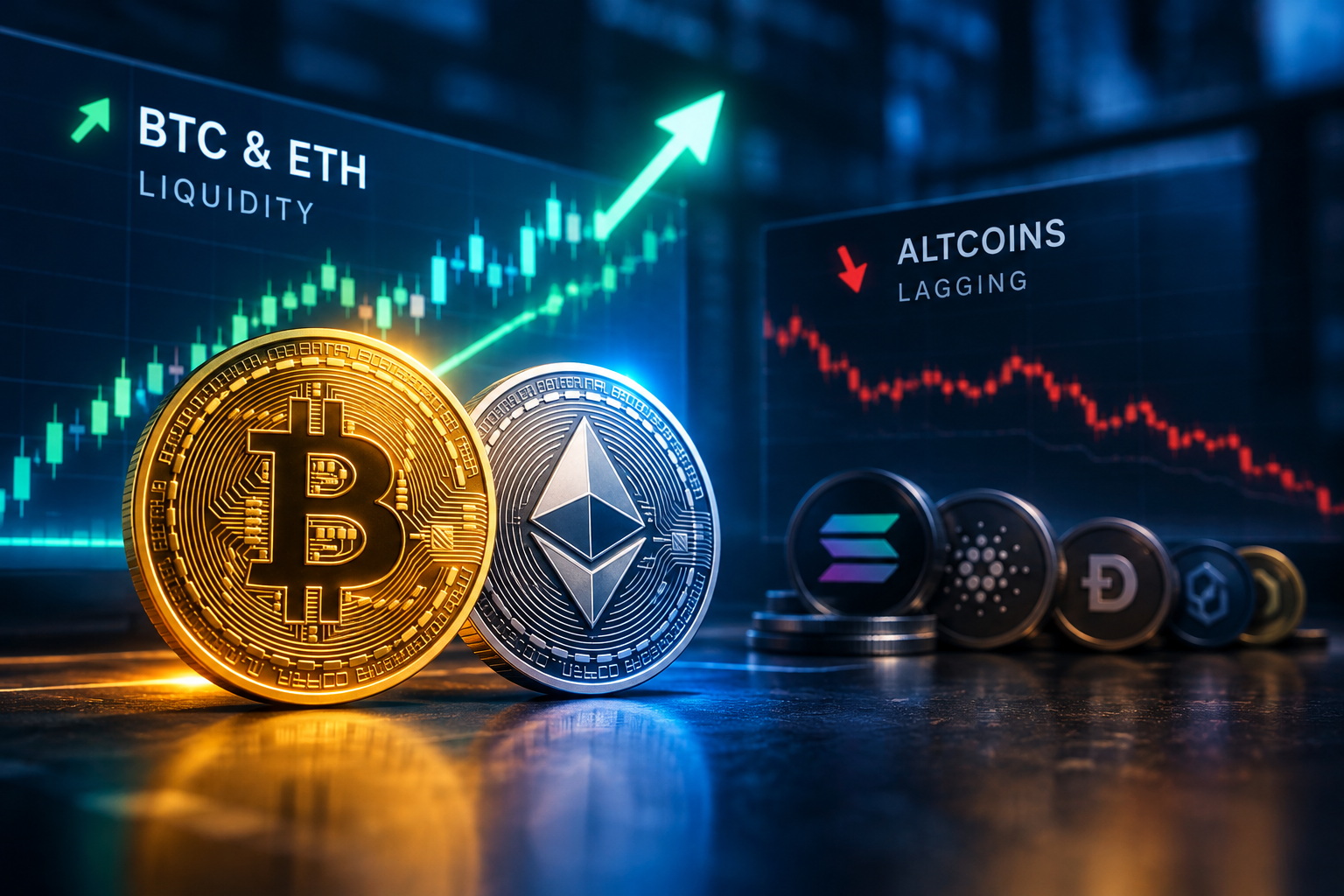
One year after one of the cryptocurrency market’s most severe liquidation events, the recovery remains uneven. Bitcoin and Ether have regained much of their lost liquidity, supported by renewed exchange-traded fund (ETF) demand and institutional participation, while the broader altcoin market continues to struggle.
For investors, this divergence signals a changing market structure in which capital, liquidity and trading opportunities are increasingly concentrated in the two largest cryptocurrencies.
Revisiting the October 2025 Market Shock
On October 10, 2025, more than $19 billion in leveraged positions were liquidated within 24 hours following a sharp market sell-off triggered by escalating U.S.–China trade tensions.
Bitcoin fell approximately 12–17% intraday from a peak near $126,000. Forced liquidations amplified the decline as leveraged long positions were automatically closed, placing further downward pressure on prices.
Altcoin derivatives markets suffered particularly severe damage. Open interest across altcoin markets declined from approximately $70 billion before the crash to around $30 billion by mid-December 2025. The contraction reflected a substantial reduction in speculative activity and market exposure.
Bitcoin and Ether Liquidity Rebuilds
Twelve months later, Bitcoin and Ether liquidity has recovered significantly, although this does not mean prices have returned to their previous highs.
Institutional participation and ETF demand have helped support market activity in these assets. U.S. spot Bitcoin ETFs, for example, recorded approximately $102.7 million in single-day inflows in October 2026, indicating continued investor interest.
Bitcoin has recently traded within the $80,000–$87,000 range, remaining below its previous peak near $126,000. The recovery in liquidity suggests that major cryptocurrencies continue to attract capital, even as prices and investor expectations adjust.
Why Altcoins Continue to Lag
The recovery across smaller cryptocurrencies has been less consistent. With lower derivatives open interest and shorter-lived rallies, altcoins may offer fewer sustained opportunities for investors relying on broad market momentum.
The median altcoin rally reportedly lasted approximately 60 days in 2024 but shortened to around 19–20 days in 2025. This trend highlights the importance of timing, liquidity analysis and careful position management.
Reduced leverage can lower the risk of widespread forced liquidations, but it may also limit the buying momentum that helps sustain strong rallies. Consequently, investors should avoid assuming that the next market-wide recovery will lift every digital asset equally.
CryptaBlocks Perspective: A More Selective Crypto Market
The aftermath of the October 2025 liquidation event offers a valuable reminder that cryptocurrency markets can change rapidly and recover at different speeds.
Bitcoin and Ether have benefited from renewed institutional attention, while altcoins continue to face a more challenging liquidity environment. For investors, identifying durable trends requires more than tracking price increases; it also means understanding capital flows, market depth and the risks associated with leverage.
As the market enters another phase of recovery, liquidity and institutional demand will remain key indicators to watch.
Our market analysis focuses on identifying opportunities through disciplined research, strategic asset evaluation and risk awareness.
Ready to navigate market dynamics and optimize your crypto investments?